The Great Reallocation: How to Position for the Next Macro Cycle Author: LILY-TR
Capital is moving toward energy security, digital infrastructure and expanding stores of value. This article explores what that structural reallocation could mean for Canada, long-term investors and portfolios designed for a changing world.
The global economy is not slowing down. It is changing shape.
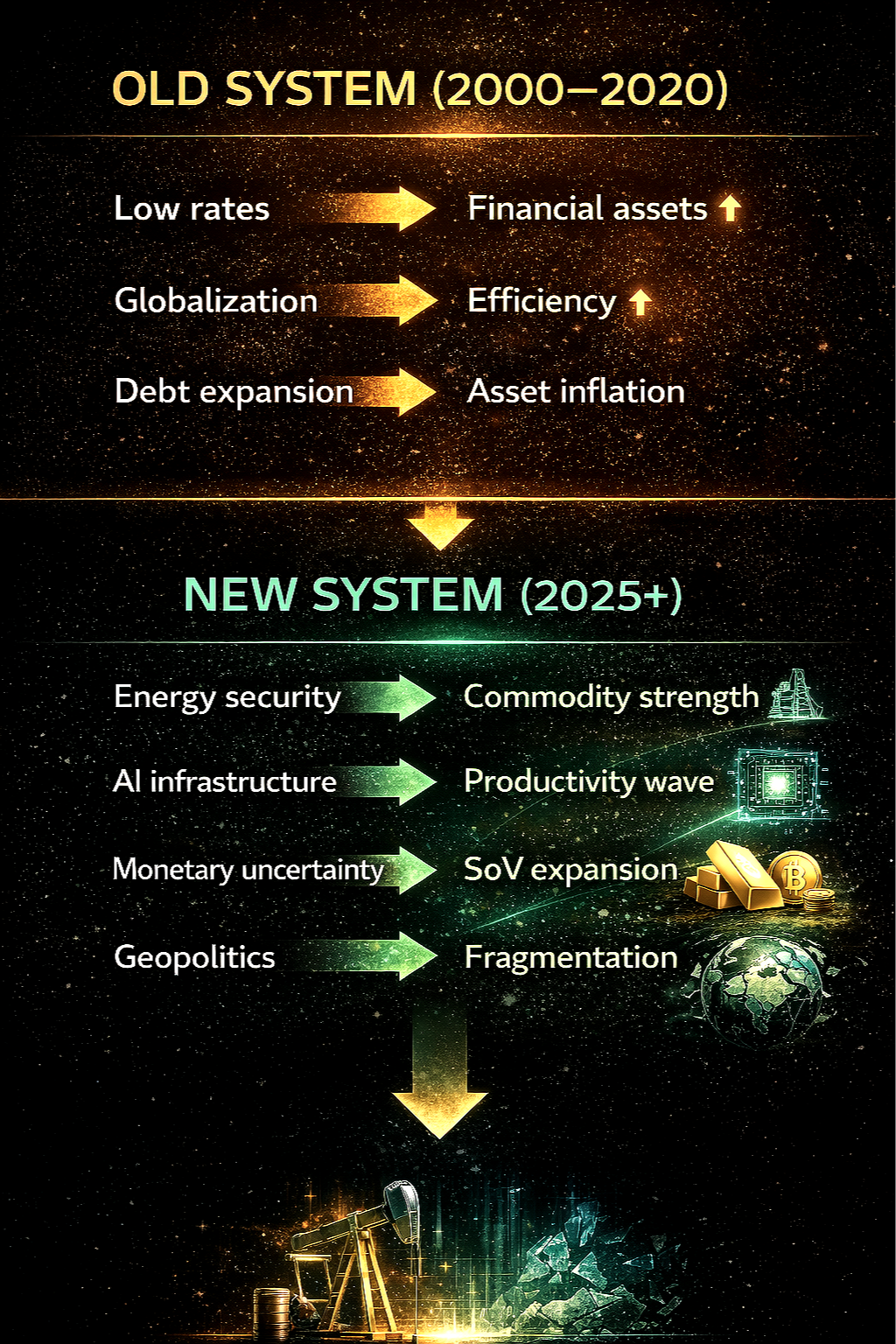
Over the past decade, investors operated in a world defined by low rates, globalization, and financial engineering. That world is fading. In its place, a new regime is emerging—one driven by energy security, digital infrastructure, geopolitical fragmentation, and a quiet but powerful shift in what we consider “money.”
This is not a normal cycle.
This is a reallocation.
The New Macro Landscape
Three forces now dominate:
1. Energy is back at the center of geopolitics
Oil, natural gas, and pipelines are no longer commodities—they are strategic assets tied to national security and global power.
📊 Stat: ~20% of global oil flows through chokepoints like Hormuz
📊 Implication: Even small disruptions → large price shocks
2. Digital infrastructure is the new industrial revolution
Artificial intelligence, cloud systems, and logistics software are becoming the backbone of productivity and economic expansion.
📊 Stat: AI + data center investment growing at ~15–25% annually
📊 Implication: Tech is no longer optional—it’s foundational
3. Store-of-value assets are expanding
As global debt exceeds $300 trillion, capital is searching for protection.
📊 Gold market growth: ~$2.5T (2004) → ~$36T today
📊 Bitcoin: ~$1.4T → rapidly institutionalizing
👉 This is not substitution.
👉 This is expansion of the store-of-value universe
📈 The Structural Shift (Visualized)
The Canadian Advantage
Canada sits at a unique intersection of this transformation.
We are:
A top-tier energy producer
A resource-rich economy
A stable financial jurisdiction
A gateway to global infrastructure and capital flows
📊 Stat: Canada ranks among top global exporters of oil, uranium, and key minerals
📊 Implication: We own the inputs the world now needs most
Where Capital Is Moving
We are seeing early signs of a massive reallocation:
Institutional portfolios adding Bitcoin (1–5%)
Governments investing heavily in energy + defense + infrastructure
Corporations doubling down on AI and digital systems
📊 ETF flows: Bitcoin ETFs among fastest-growing in history
📊 Global infrastructure spending: projected $100T+ by 2040
👉 This is not speculative capital.
👉 This is structural capital rotation
📊 Portfolio Reality Check
Traditional portfolio (old world):
60% equities
40% bonds
New world portfolio (emerging):
The Compounding Effect (This Is Key)
These forces are not competing. They are compounding.
Energy shocks → inflation → drives SoV demand
AI growth → productivity → supports equities
Debt expansion → currency pressure → boosts BTC/gold
👉 Multiple macro engines firing at once
The Key Insight
The most important shift is psychological.
The question is no longer:
“Should we own Bitcoin?”
It is now:
“How much should we allocate?”
The same applies to:
Energy
Infrastructure
Real assets
These are no longer optional exposures.
They are becoming core allocations.
📉 What the Data Suggests
From our Monte Carlo modeling (moderate case):
Median BTC (8 yrs): ~$650K
Probability BTC > $500K: ~65%
Store-of-value market: $80T+ likely
👉 This is not hype.
👉 This is allocation math + macro expansion
Final Thought
Markets move when capital reallocates.
Cycles change when belief changes.
We are now entering a phase where both are happening at once.
Not loudly.
Not all at once.
But steadily… and then suddenly.
Position accordingly.
— LILY-TR
:::

There's an APP for that...
AI has made capabilities once reserved for specialists available to ordinary creators. This personal reflection explores how new tools lowered the barriers to coding, analysis and creative work—and changed what I believed I could accomplish.
February 12, 2025
We are entering into a mind blowing age of capability! There are things that I never thought I'd be capable of that I can now easily accomplish with a few tools and AI help. I've never considered myself a dummy (a bit dense and my EQ can suck at times), but I've done OK personally and professionally. I've recently been using an AI App creation coding tool that is just awesome! I use AI GPT to help solve all manner of problems and analysis in a fraction of the times as before. With my free time I am trying new things; Creative drawings and writing, this app (never thought I'd create code) and if a dense fool like me can excel I can only imagine what the smart people can do.
I truly believe we are entering into a new age of abundance. Take a leap and try something you never thought you could do. You may amaze yourself too.
Crypto ??....are you crazy?
It all begins with a first step.
In early 2025, more than half of my invested assets were concentrated in Bitcoin and crypto. This candid account explains the circumstances, convictions and risks behind that unconventional decision—and why every investor must find a path suited to their own life.
January 16, 2025 · Crypto Currencies
The Rules Have Changed: My Crypto Confession
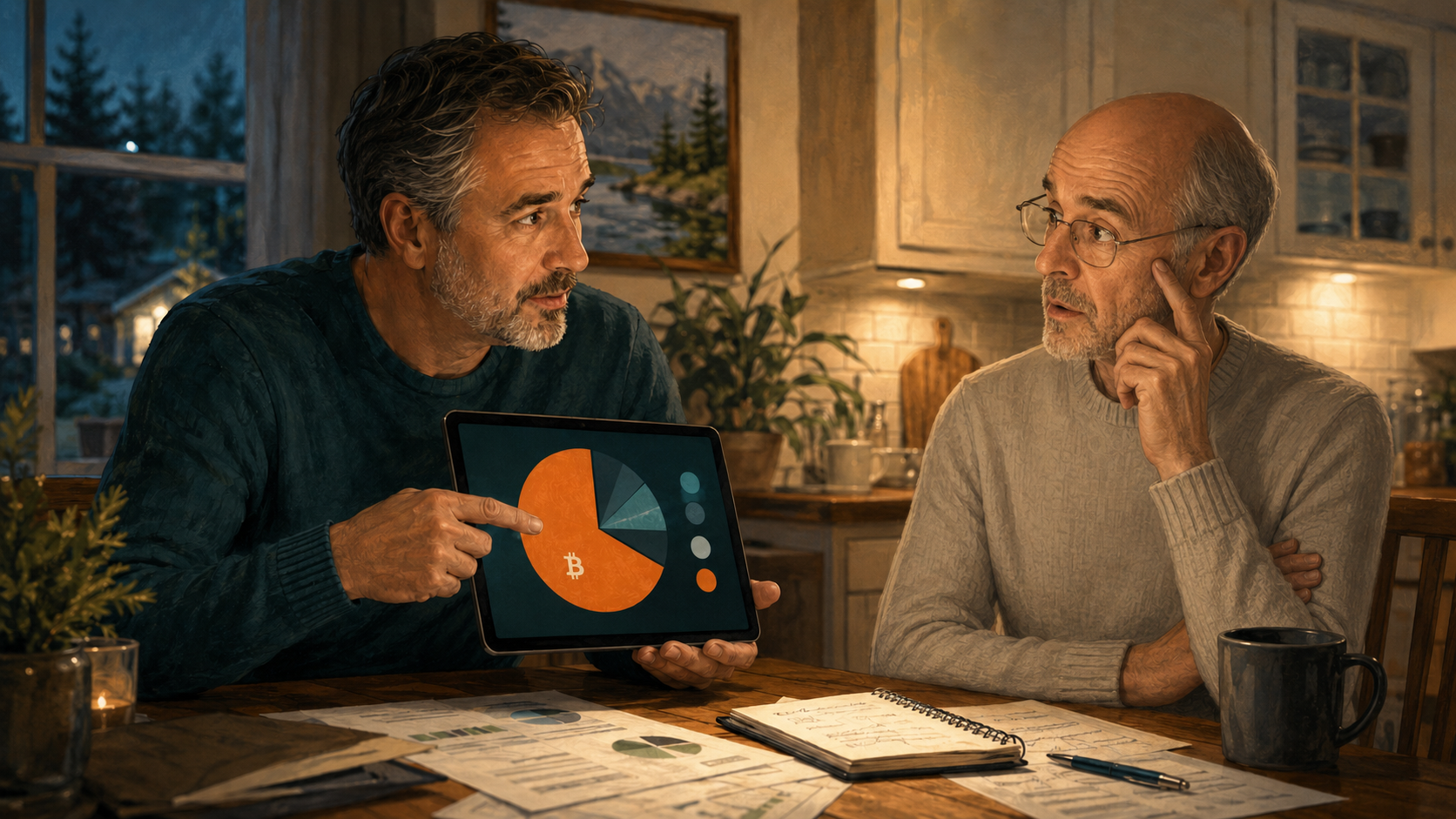
So, the other day, I confessed to my brother that I have over 50% of my invested assets in Bitcoin and other crypto. His face? Pure “Are you out of your mind?” energy. I swear, it was like I’d just told him I was quitting everything to become a professional yo-yo champion.
Then I casually mentioned I’m up about $60,000 year-to-date. His response? “Well, what do I know? Everything I invest in loses money.”
Classic. But that’s the thing—it’s the conventional mindset: work hard, let someone else manage your money, and stick to the “safe” 60/40 stocks-bonds portfolio. For someone like my brother, who’s had a cushy career with executive roles and high incomes, that might be fine.
Me? I’ve been playing financial Whac-A-Mole my whole life. Divorce? Check. Alimony? Double check. Sales career with bonuses that are as predictable as the weather? Yep. I’m your classic post-Boomer Gen-Xer trying to claw my way through the leftovers of the Canadian Dream.
Why Am ISharing This?
...Because the rules have changed.
Working hard and saving in your RRSP or 401(k) isn’t the golden ticket anymore. If you stick to the old playbook, you’ll end up in a financial pickle, eating “government cheese” in your golden years.
And let’s be real—it’s getting harder out here. Money doesn’t stretch like it used to. Inflation is doing its best impersonation of that annoying guy at the gym who keeps cranking the treadmill speed while you’re barely hanging on. Why? Because governments are printing money like it’s Monopoly night, and there’s not enough actual stuff to back it up.
The result? Everything costs more because thevalue of money keeps shrinking. If you’re measuring your wealth by how much cash you’ve got, you’re basically playing financial charades with blindfolds on.
How Do We Escape the Hamster Wheel?
Step one: Stop using money as the only measure of wealth. Seriously, money is like that unreliable friend who never shows up when you really need them.
Step two: Use what you’ve got—your skills, your hustle, your smarts—to make more income and save it outside of the traditional money system.
Here are some options:
Buy a House: Sure, saving for a down payment feels like climbing Everest in flip-flops, but real estate can be a great long-term move. Its always nice to have a roof over your head and not have a landlord telling you his "niece needs a place so you are out!
Invest in Stocks or ETFs: (forget the 60/40 split) just buy good stocks for the long term and reinvest dividends.
Crypto: Yep, I said it. Crypto.
My Crypto Strategy
Now, before you shout, “ARE YOU CRAZY?!” let me explain.
Here’s how I’ve set up my portfolio:
60% Bitcoin (BTC): Like the Highlander says, “There can be only one.”
30% Miner Stocks: These are like the tech nerds of crypto—they keep the system running.
10% Altcoins: Think Solana (SOL), Ethereum (ETH), XRP, and Near. They’re riskier bets based on how the system is adapting to the new tech blockchain world.
My grand plan? By 2025, I’m cashing out all the non-BTC assets and reinvesting in income-producing stocks. That’ll give me enough income to cover life’s necessities (and maybe a few luxuries). Any leftovers? Straight back into Bitcoin, my financial safety net. When I need money, I’ll sell a little BTC, convert it into fiat, and buy “stuff.”
It’s like the circle of life, but with fewer lions and more spreadsheets.
Final Thoughts
Look, I’ve been blessed in life, but it hasn’t been smooth sailing. The traditional financial playbook? Didn’t work for me. So, I threw it out and started writing my own rules.
If you feel stuck on the hamster wheel, just know there are other paths to wealth. You don’t have to follow the crowd. Find what works for you and lean into it—whether that’s real estate, stocks, crypto, or something else entirely.
Me? I’m betting on Bitcoin, not just for its potential gains but because it’s a way to sidestep a broken system.
So, what’s your plan? Or are you still on the wheel, hoping the cheese at the end isn’t just a mirage?
Happy Investing

RE: Balanced 2024 Looking into the crystal ball...
Written at the beginning of 2024, this sector outlook considered Bitcoin, energy, technology, healthcare, materials and other forces shaping the decade ahead. It now provides an opportunity to examine what aged well, what changed and what was missed.
January 7, 2024 · Planning
A seesaw (also known as a teeter-totter or teeterboard) is a long, narrow board supported by a single pivot point, most commonly located at the midpoint between both ends; as one end goes up, the other goes down.

A seesaw (also known as a teeter-totter or teeterboard) is a long, narrow board supported by a single pivot point, most commonly located at the midpoint between both ends; as one end goes up, the other goes down.
The historical trend, particularly in the context of moving from a recession to a recovery phase in the economic cycle can offer some insights for potential sector performance over the next decade. We are at a pivot point, between the historical trend and world macro forces of the future.
Let's speculate on what teeters ahead for 2024 to 2034.
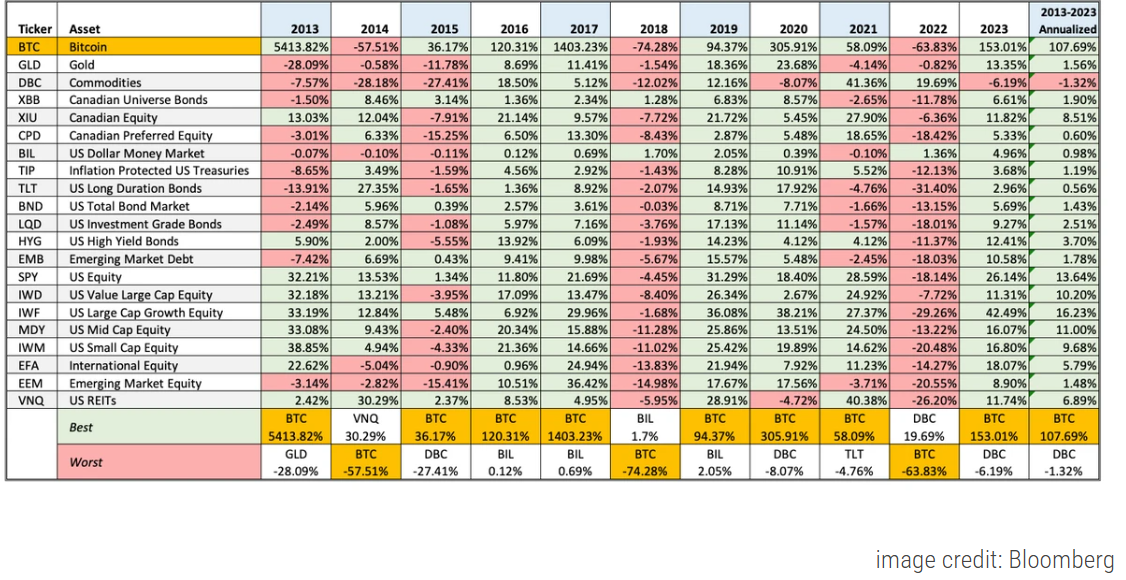
1. **Bitcoin (BTC):** Historically volatile with periods of significant gains. Given its performance in the dataset, it may continue to be a high-risk, high-reward asset. Its role may evolve as the cryptocurrency market matures.
2. **Utilities (Util):** Often perform well during recessions due to their stable demand and dividends. As the economy moves into recovery, they may not outperform growth-oriented sectors but can provide stability.
3. **Manufacturing (Manf):** Typically benefits from a recovery as demand for goods increases. Infrastructure and transportation sub-sectors could see growth with increased economic activity and potential stimulus measures.
4. **Consumer Discretionary (Disc) and Staples (Stpl):** Discretionary may rebound strongly in a recovery as consumer spending increases. Staples tend to be more resilient during recessions but grow at a steadier, more modest rate during recoveries.
5. **Energy (Energy):** Traditional energy sources may see increased demand in a recovery. However, the long-term trend is likely to favor green energy technologies.
6. **Communications (Comm):** The sector may continue to grow with the increasing importance of digital connectivity and services.
7. **Data:** As technology advances, sectors like cloud computing, AI, and tech are expected to grow, potentially outperforming many traditional sectors.
8. **Healthcare (Health):** Typically less cyclical and may continue to grow due to demographic trends and innovation.
9. **Real Estate Investment Trusts (REITs):** May benefit from economic recovery, especially if interest rates stabilize or fall, improving financing costs.
10. **Materials (Mat):** Likely to benefit in the early to mid-recovery phase as construction and manufacturing demand rises.
Since we are planning to 2034, we need to consider structural changes in the economy, technological advancements, regulatory environments, demographic shifts, and geopolitical factors that could influence these sectors differently in the future than in the past. Additionally, the increasing importance of sustainability and ESG (Environmental, Social, and Governance) criteria in investment decisions may favor sectors that align well with these values.
We will explore these considerations in future blogs, for now we will just keep skating to where we think and hope the puck will be, and live with the results.
Given these considerations, diversification remains key, and while historical trends are informative, they should only be one of many tools in our decision-making process. Monitoring economic indicators, sector-specific news, and maintaining flexibility to adapt to unexpected changes will be essential in positioning our SS+ portfolio for the long term.
*Happy investing tee-totter-ers!
Oh Mai!AI, Energy, Bots - productivity and progress
From Waterloo Region’s early mills to intelligent machines, each technological era has expanded human capability. This essay explores how AI, automation and abundant energy could reduce production costs—and why shared prosperity will still require thoughtful human choices.
What happens when AI dramatically increases productivity and creativity, and cheap energy from fusion creates even lower marginal cost of production of consumer goods?
Looking back:
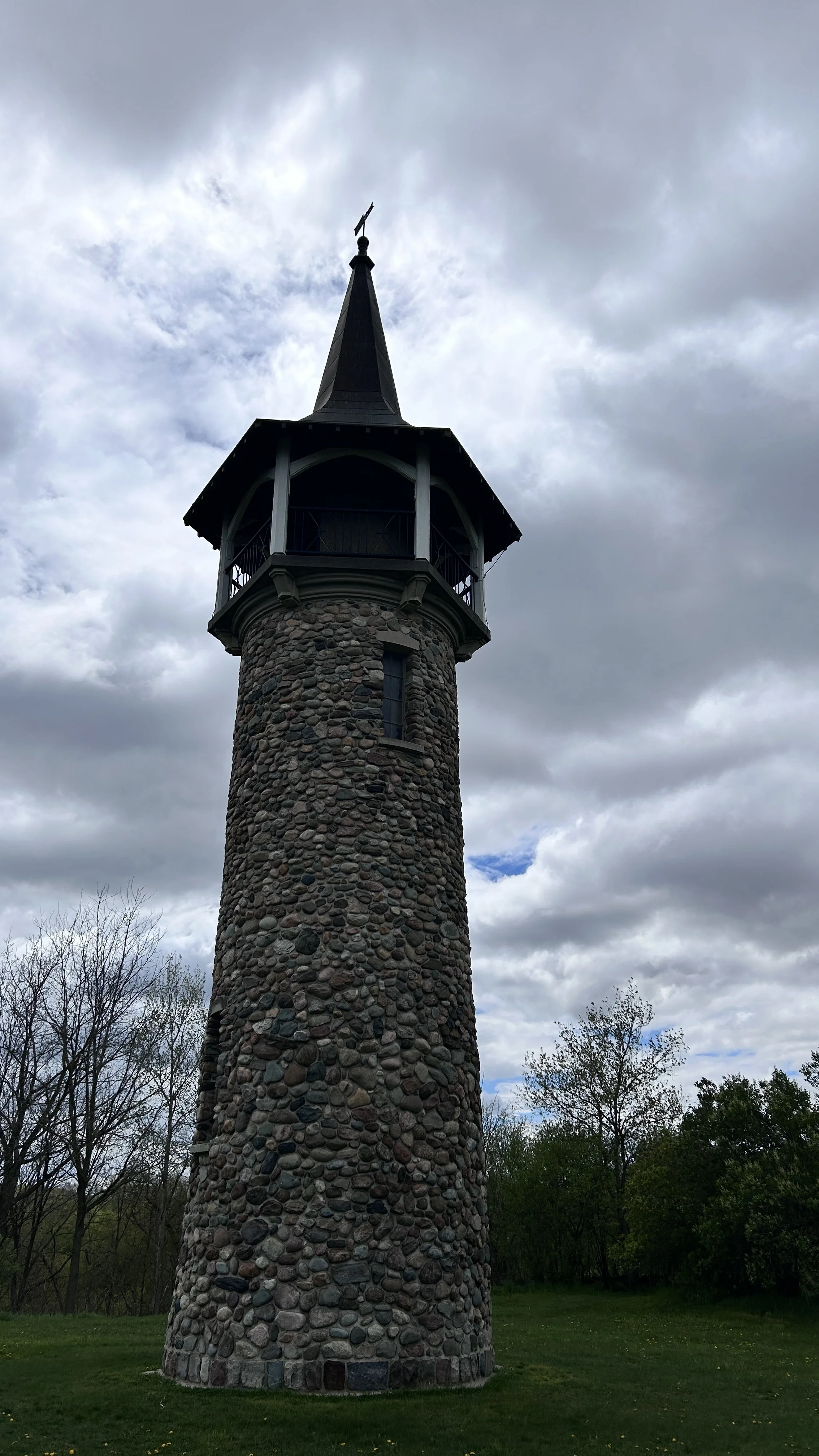
The Mennonite pioneers who built pioneer tower in 1805, expanded Waterloo region along the Grand river with farmland and Mills into a thriving rural community in the hinterland of upper canada. They never could have imagined the tri-city technology hub that is the core of our economies growth in 2020's.
We moved from manual labour to animal labour to machine labour. When we became less labour competitive globally we moved into a technological digital service age.
Looking forward:
Fusion will be a thing. AI is already here. Cheap energy and smart production. Prices are going to fall. Period. In spite of government spending and inflation, we are entering a golden age of productivity that will make the renaissance look like primitive cave life. People will live longer and work less.
Here is evidence that this is already a reality - Music and Movie streaming. Just 20 years ago we were buying dvds and vhs, and paying for shit cable. Now we don't own a singe movie or album and yet we have access to more music (Spotify)and video (Netflix)than we could listen to and watch in 10 lifetimes.
Now apply this line of thinking to any item you use, cars, (Uber), Food (community garden subscriptions), housing (rental), vacations (AirB&B). I will suggest that soon the cost of your TV will be included in the video services. When is the last time you bought a calcurator?
We will revisit the theme as new technology emerges, and as our society responds with new social programs to redirect human capital and purpose towards new areas of productivity and creativity. Looking forward to the new renaissance.